NatHERS — the Nationwide House Energy Rating Scheme — is the model that most new Queensland houses hide behind when someone asks whether the place will be habitable in February. It produces a star figure from a simulation of heating and cooling energy, under standard occupancy, in a climate file that is not your particular street. Used well, it forces a designer to look at glass, shade, insulation and colour before the kitchen tapware. Used as a sales badge, it is a number that can be juiced with assumptions the household will never live.
This piece is a design reading of the rating in a hot-humid state. It is not an assessor’s manual. Software versions, NCC adoption dates and QDC clauses move. Read the certificate you are actually handed, and the edition of the code your certifier is using.
Stars are not bills
NatHERS estimates the thermal energy a house would need, per square metre, to keep a standard family inside a comfort band. More stars means a lower modelled load. The current Queensland conversation for a new Class 1 house sits at the NCC 2022 setting: a 7-star whole-of-house pathway, with the thermal fabric rated through NatHERS or another verification method, plus the equipment and on-site energy pieces the code now counts. Queensland’s commencement and any transitional concessions should be checked on the dated certificate, not on a 2023 Facebook post.
What the stars will not tell you: how often you work from the western bedroom, whether you run a clothes dryer in January, whether the ducted system was stuffed through a 50-degree roof space, or whether you paid 32 cents a kilowatt-hour. A household that lives with the blinds down, the fans on and the splits at 26 degrees will beat a household that treats 21 degrees as a human right. The model cannot save you from the second group.
That is why a competent climate-responsive plan still matters more than a last-minute glazing upgrade that exists only to chase half a star. If the living room faces west and the eaves are 450 millimetres, the assessor can still find a path to a pass. The afternoon will not.
What Queensland actually requires
Queensland administers the National Construction Code and, alongside it, the Queensland Development Code. Energy for housing has lived in both. QDC Mandatory Part 4.1 — sustainable buildings — has been the local instrument owners hear about, covering insulation, lighting, water fittings and, in various editions, rainwater and energy features. The NCC energy efficiency provisions have tightened nationally; Queensland’s adoption timetable has not always matched New South Wales or Victoria on the same Monday.
The practical consequence for an owner is simple. Your certifier will ask for an energy report that matches the drawings they are approving. If you later change the glass, the roof colour, the eave or the outdoor-room roof, the report may need to be run again. A variation that “doesn’t affect structure” can still affect stars. Write that into the contract conversation: who pays for a rerun, and who is allowed to change a specified window to a cheaper, hotter one.
Queensland is not New South Wales. BASIX does not apply here. BASIX is a NSW planning certificate that scores a dwelling’s water and energy against state targets and produces a stamp a Sydney certifier expects to see. It has no force on a lot in Ipswich or Moreton Bay. Solar, tanks and ratings in SEQ are governed by the NCC, the QDC, the local planning scheme and the electricity connection rules — not by a BASIX score. Anyone who copies a Sydney specification sheet onto a Yarrabilba contract is doing you a disservice.
Insulation in a hot-humid climate
The first surface to insulate in Brisbane is the one the sun hits: the roof. A light-coloured metal roof, a reflective sarking, a decent ceiling batt and a roof space that is not a sealed oven will do more for upstairs bedrooms than another increment of wall R-value on a shaded south elevation. Wall insulation still matters, especially on the west and on lightweight construction that otherwise follows the outdoor temperature like a tent. Floor insulation matters when the floor is exposed — a Queenslander, a steep sloping block, a house on stumps. A slab on ground is already a thermal object; whether that object helps you is a shading question, not an R-value sticker.
Hot-humid insulation has a moisture subplot. Vapour that hits a cold surface condenses. A heavily air-conditioned bedroom against an uninsulated western wall, or a duct sweating in a roof space, will stain a ceiling faster than a “failed” rating. Specify the insulation as a system: product, continuity, a way to inspect it before plasterboard closes, and a ventilation plan for the wet rooms. Airtightness is useful. Airtightness without exhaust is how a 7-star house grows mould behind the built-in.
Glazing is the lever the brochure underprices
In a Brisbane rating, glass is usually the damage. Solar heat gain on the west and north-west, and the area of that glass, move the modelled cooling load more than another increment of wall wrap. A lower SHGC (solar heat gain coefficient) on the punished elevations, external shade, and a refusal to glaze a whole western wall will do more than a premium u-value on a south window that never sees sun.
U-value still matters at night and in a cool July, and it matters for condensation on a split-cooled room. It is not the first number to haggle in SEQ. Ask the assessor to show you, in plain language, which windows are carrying the load. Then decide whether you want those windows, or whether you want a wall and a smaller opening. The alfresco roof that shades the glass is part of the glazing specification, even when it is sitting in the landscaping budget.
High-performance glass is not a licence to point a living room at the sunset. Physics is not impressed by the brand on the spacer.
Solar, tanks and the rest of the energy story
Rooftop photovoltaic systems are now an ordinary part of a new SEQ house, and the NCC whole-of-home pathway has made on-site energy harder to ignore. A north or north-east array, a roof that was designed for it — not a parade of hips and skylights — and an electrical plan that puts the switchboard and the inverter where a human can service them will beat a last-minute “solar ready” sticker.
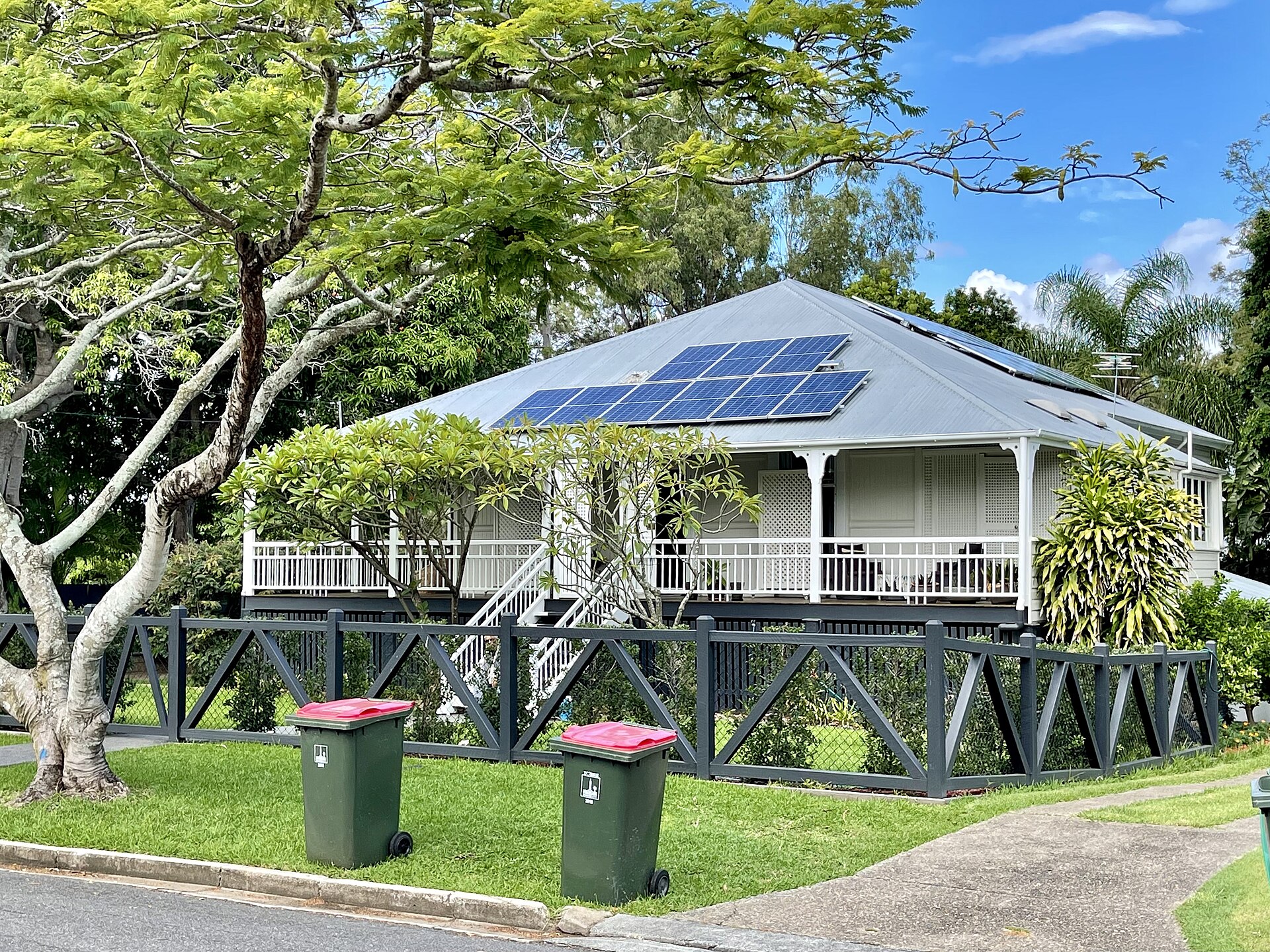
Solar does not fix a dark western roof or an unshaded slab. It offsets a bill. The Laidley roof in the photograph is doing one job well. It cannot undo a plan that treats February as an equipment problem.
Rainwater tanks sit in the QDC and in many local schemes as a water measure, not a NatHERS star. They still belong in the same owner conversation: roof area, first flush, a tap that actually gets used, and a structural load the engineer knows about. A tank that overflows onto the neighbour’s easement is an approvals problem. A tank that is never plumbed to a toilet or a cold-laundry tap is a plastic garden ornament.
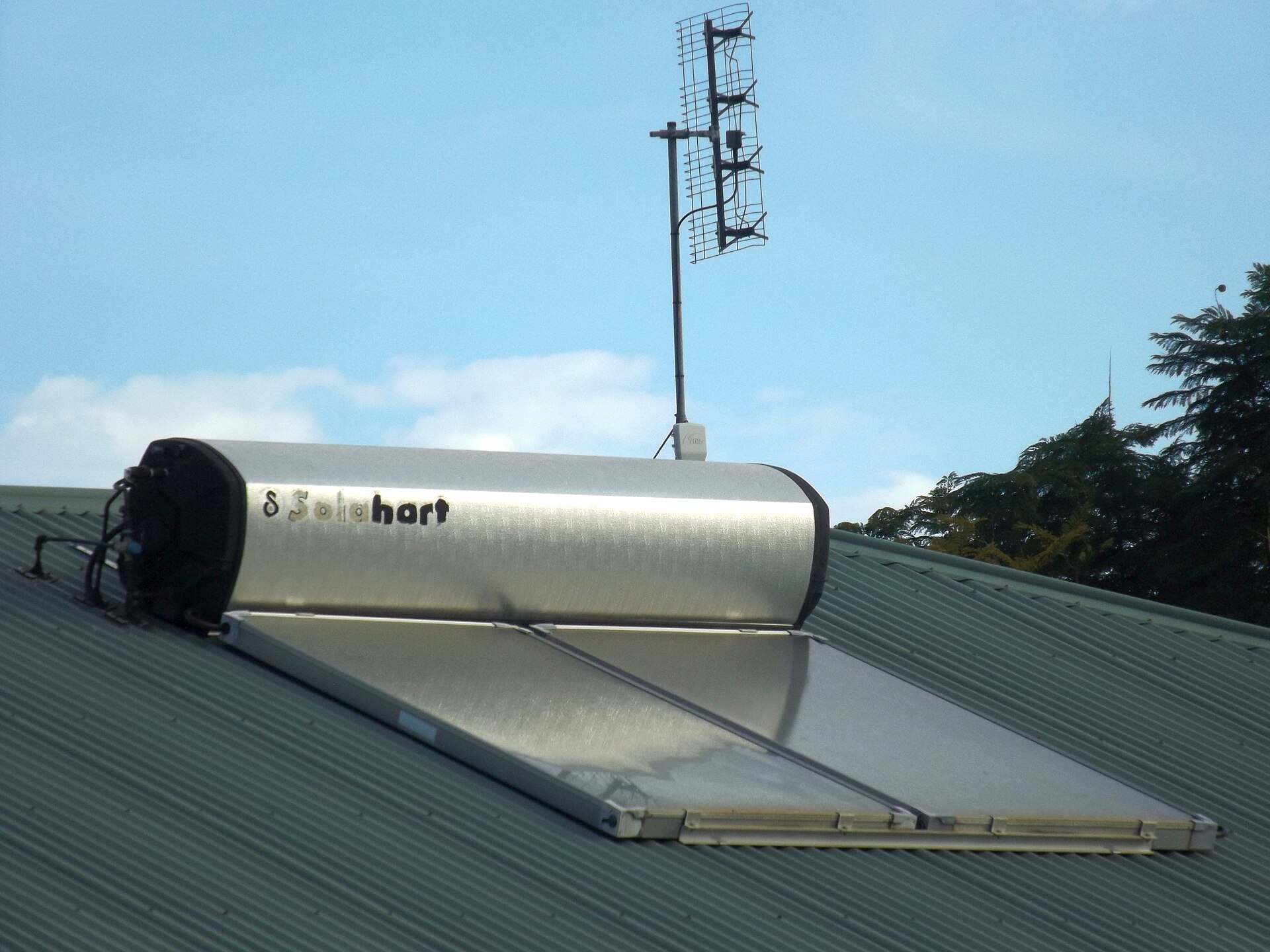
Hot water, lighting and the laundry are where household behaviour and the code meet. A heat-pump hot water system in a subtropical climate is usually a rational plant. It wants air around it and a location that will not keep the outdoor room awake at 2am.
How to read the certificate you are handed
Ask for the NatHERS (or alternative) certificate that matches the drawings, not a sample from another lot. Check the climate zone, the roof colour, the eave depths, the window schedule and whether the outdoor room is in or out of the model. Check that the assessor is accredited. If the builder later substitutes a window or deletes an eave, ask whether the certificate still applies. If you are buying a completed spec home, ask for the as-built energy documents, not the marketing 7-star claim from the facade range.
A rating is a useful argument with a designer. It is a weak argument with a summer. Design the shade, the roof colour, the glass and the fans as if the certificate did not exist. Then let the certificate catch the mistakes. That is the right order in Queensland, and it always was.
Frequently asked questions
Is a 7-star NatHERS house cheap to cool in Brisbane?
It should be easier to keep comfortable than a 5-star glass box, but the stars do not predict your tariff, your occupancy or a west-facing living room you refuse to shade. A well-shaded 6-star house can beat a poorly used 7-star house on the bill. Treat the rating as a design discipline, not a warranty.
Does Queensland use BASIX?
No. BASIX is a New South Wales planning certificate that scores water and energy for new dwellings in that state. Queensland uses the National Construction Code energy provisions, NatHERS (or an alternative verification path) and the Queensland Development Code. If a salesperson starts talking about BASIX on a Ripley lot, they have imported the wrong state.
Where should I put insulation in a Brisbane house?
The roof and ceiling are the first battleground, then the western and northern walls, then the floor if it is exposed. Insulation without shade and a light roof is a rear-guard action. Airtightness without a ventilation plan is how new houses grow mould.