A kitchen or bathroom in South East Queensland is a wet machine in a humid climate. That sounds obvious until you watch a specification written for Melbourne — closed plasterboard boxes, recirculating rangehoods, raw steel handles, pale stone without a drip edge — fail in a Corinda summer. The failure is rarely dramatic. It is swollen kickboards, a mould line on the silicone, a fan that vents into the roof, and a north-facing pane that turns the sink into a griddle.
This is renovation work and design work at the same time. The pretty sample is the last decision. The first ones are where the water goes, where the air goes, and whether the substrate can dry.
Moisture is the brief
Brisbane's warm months are not only hot. They are wet in the air even on days it does not rain. A bathroom that is used twice in a morning and then shut will stay at a dew point that timber, grout and cheap paint cannot live with. A kitchen that boils stock under a hood that goes nowhere will paint a grease film on every high cupboard.
Start with the envelope of the wet room. Floors must fall to a waste where the standard and the room type require it. Walls in the shower must be a wet-area substrate, not leftover plasterboard and optimism. The junction at the hob, the bath and the floor waste is where houses leak into the joists of a Queenslander or into the waffle of a new slab. AS 3740 and the National Construction Code set the waterproofing logic. A tiler who "always does it this way" is not a substitute for a documented system: membrane type, bond-breaker, upturns, and a flood test before the tiles go down.
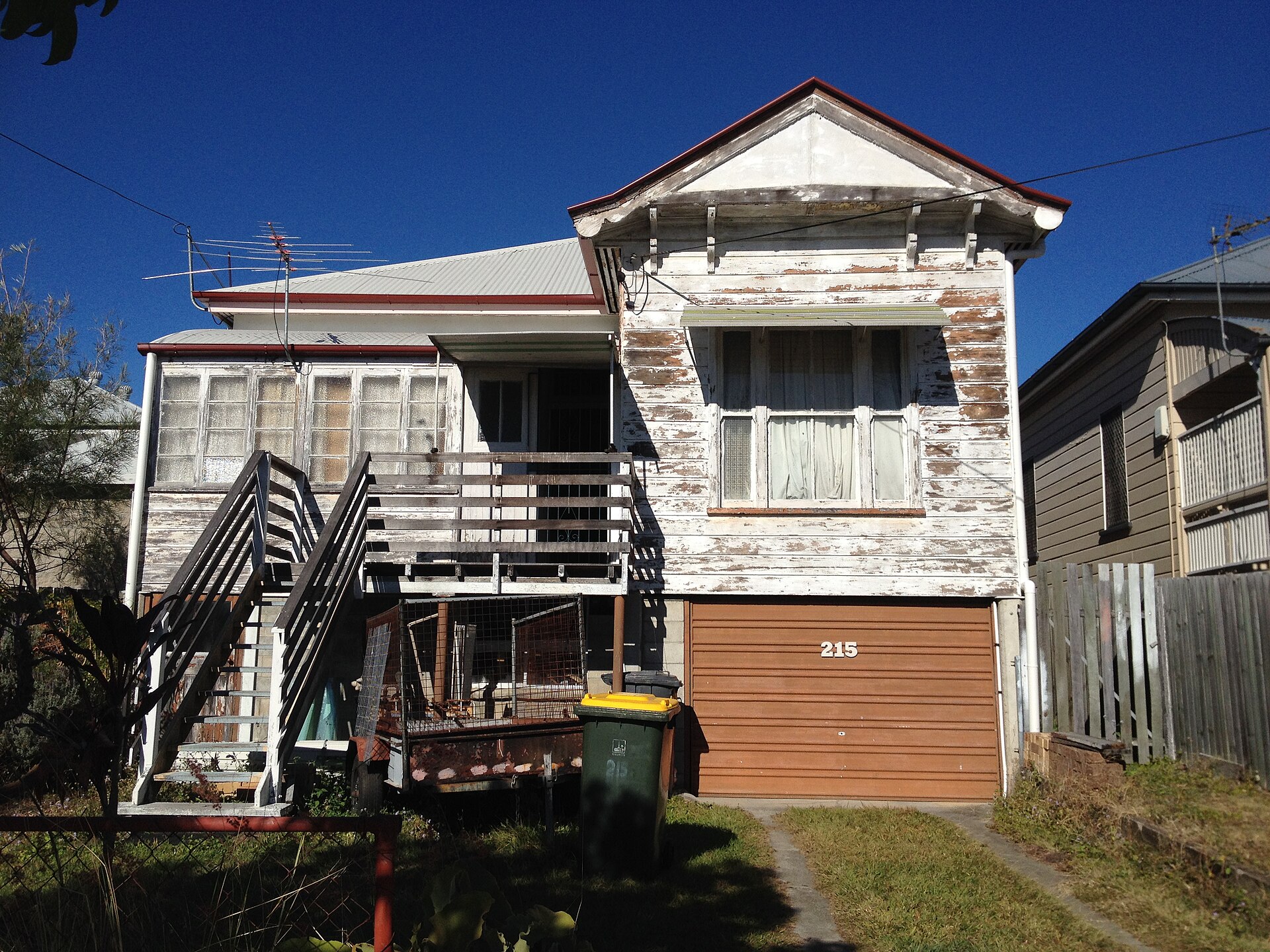
In a timber house the wet area is a structural risk. Water that leaves the tray will find a bearer. The Queenslander renovation guide is blunt about bathrooms in old frames for this reason. In a new slab house the risk is quieter: a failed membrane sits on concrete and announces itself as a smell in the hallway six months later.
Mould is a symptom. Bleach is not a design. If a ceiling spots above the shower, you have a ventilation or a thermal-bridge problem, sometimes both. If the back of a pantry smells after rain, you have a wall that cannot dry, or a slab edge holding water from a garden you watered against the house.
Exhaust has to leave the building
The single most useful sentence in a subtropical wet-area spec is: the air goes outside. A bathroom fan that dumps into the roof space is a condensation device. A rangehood that recirculates through a charcoal filter is a gesture. Both are common in renovations that were priced to a number rather than to a climate.
Duct the bathroom fan through the roof or the wall to a cowl that will not flood in a storm, and put a run-on timer on it so the room keeps extracting after the door closes. Size the fan for the volume. A powder room and a family bathroom with a bath are not the same room. If the bathroom has no external wall, the duct run is part of the architecture. Do not leave it as a variation for the electrician on the last Friday.
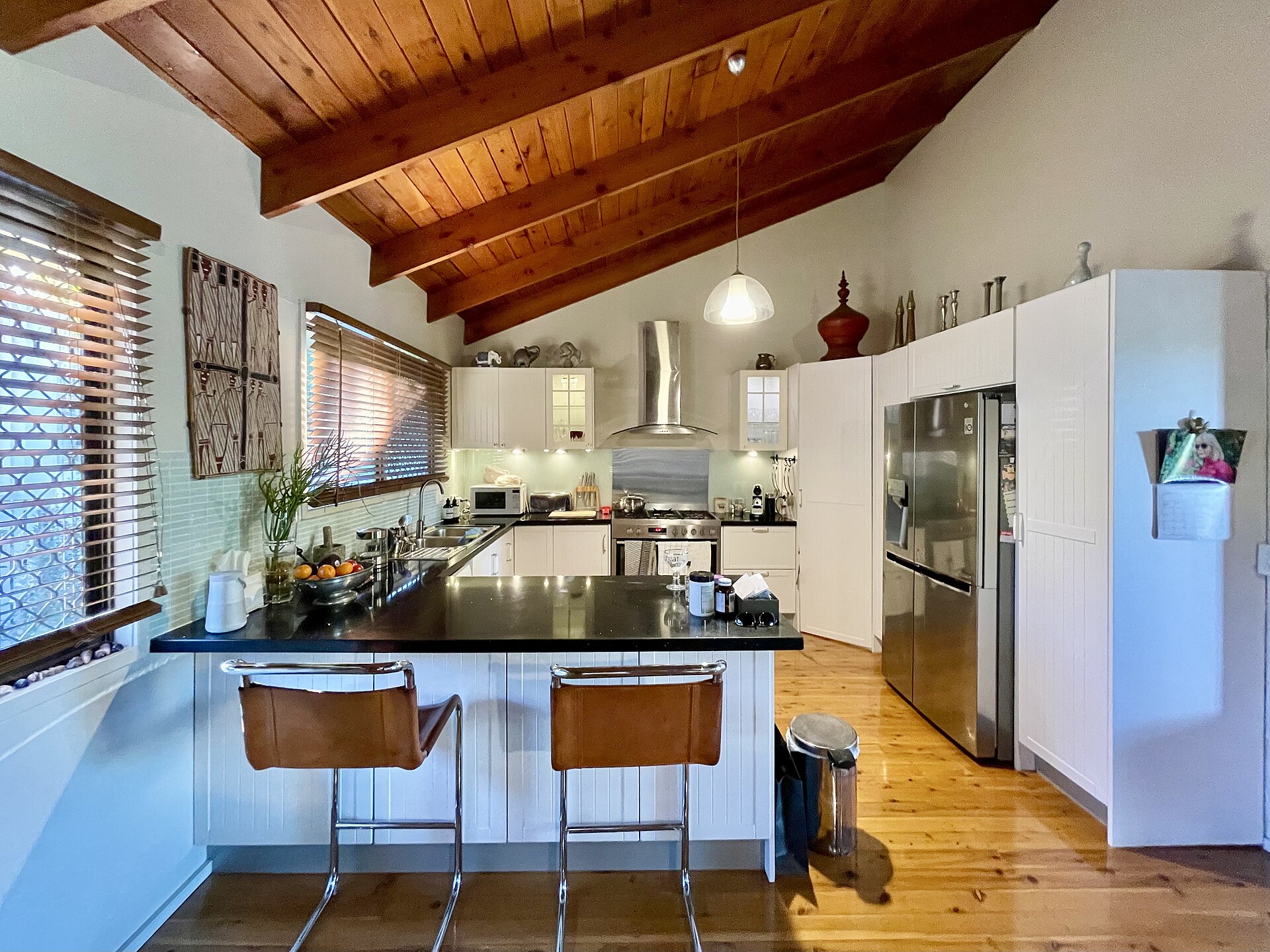
In the kitchen, a hood only works if it captures. That means width, overhang, and a sensible mounting height above the cooktop — and a duct that does not wander through twenty metres of flex before it dies in the eaves. Induction helps because it puts less waste heat into the room; it does not abolish steam. Openable windows still matter. A fan is a machine. A casement that catches the south-easterly is a habit. Specify both.
Stone, laminate and the cult of the bench
The bench is where money and anxiety meet. Natural stone — marble, some limestones, some poorly sealed granites — will etch, stain and darken at the sink if the household uses the kitchen as a kitchen. That is citric acid, not a moral failing. Engineered stone has its own history in this country, including the legitimate health controls around fabrication. What you specify now should be a product a licensed shop will still cut, or it should be something else.
High-pressure laminate, used honestly, is a good Brisbane material. It does not like a raw particleboard edge at a sink or a cheap substrate that swells. It will, if the substrate is moisture-resistant and the sink is well-sealed, outlast a romantic stone that the owners are afraid to touch. Timber benches are beautiful and they are work. Stainless is the commercial answer and spots if you treat tap water as invisible. There is no prestige hierarchy that beats a drip edge, a fall to the sink, and a join that does not sit in a puddle.
Cabinetry fails at the kick and the sink base. Specify a substrate that can take a wet mop, a kick that can be replaced, and a sink drawer that is not raw board. In a Queenslander, keep heavy stone off a floor that still moves unless the joists have been designed for it.
Waterproofing is a hold-point, not a trade rumour
Ask to see the membrane before it disappears. Photograph the upturns, the corners, the waste, the hob. A flood test on a shower tray is a morning, not a delay. The people who skip it are the people who will be back in a year to chase a brown line down the hallway plaster.
Silicone is a maintenance item. It is not the waterproofing. If the only thing between the shower and the frame is a bead, you do not have a wet area. Recessed shelves, hobless showers and floor-to-ceiling tile look clean and they concentrate water at the most awkward junctions. Detail them or do not specify them.
On an upper floor, assume a leak will find the kitchen you just finished below. That is why the living-through-the-works sequence should not demolish the only working bathroom on the same week the new tray is being tanked. One dry, legal shower is a finish decision as well as a human one.
Floors that can live with wet feet
Tiles on a well-made screed remain the honest wet-area floor. Large-format tiles look calmer and they hide fewer falls; they also telegraph a hollow if the bed is lazy. Keep a real fall to the waste. A "level" bathroom that ponds at the door is a design error.
Timber and timber-look floors through a kitchen want an honest conversation about water and climate. Solid timber in a Brisbane house moves. It always has. A wide pale board next to a dishwasher and a dog bowl is a maintenance hobby. Engineered boards vary; none of them want a weekly flood from a fridge filter. If you want timber in the living room, stop it at a sensible threshold and let the wet rooms be wet rooms.
Vinyl can be the right answer in a rental or a house that will take a beating. It fails at the edges and at cheap underlays that hold water. Whatever you choose, the skirt and the junction at the external door are where storm water and mop water meet. A Queenslander floor that steps to a verandah needs a detail, not a hope that the southerly will not drive rain under the door.
Hardware, salt and the finish that seizes
Moreton Bay is not the tropics of a resort brochure, but it is saline enough, and humid enough, that cheap zinc, raw mild steel and uncoated industrial fittings will spot, pit and seize. This is true in Wynnum and it is still true, more slowly, in Ashgrove. Specify graded stainless or a finish the manufacturer will warranty in a coastal humidity zone. A matt black paint that wears to white metal on every door edge will look like a different house in eighteen months.
Hinges and runners are the hardware you replace on your knees. Soft-close units that were never meant for a steamy bathroom will swell and drag. Ask for wet-area-rated fittings in wet rooms.
North-facing glass is a winter gift and a summer load
In Brisbane, north is the useful sun. A kitchen with a north window over the bench can be a lovely winter morning and a glare problem in February if there is no eave, no permanent shade, and no way to vent the room. The climate-responsive design desk is the right place for the whole-house version. In the wet rooms, do not put an unshaded north or west pane behind a cooktop, and do not put a skylight over a shower unless you like a greenhouse.
Glass also condenses. A single-glazed pane above a sink on a cool July morning will run. That water wants a sill that can take it, not a raw MDF reveal. Dark benchtops under unprotected glass become a burn hazard. Sample in the room, at 2pm in February if you can, not under a showroom downlight.
Specify as if you will still be here in a wet decade
The finishes that last in this climate are a little dull on a mood board and very good at 6am after rain. They exhaust to outside. They tank the tray and test it. They keep timber where it can move and stone where someone will maintain it. They use hardware that does not treat humidity as an insult. They shade the glass that makes the kitchen possible.
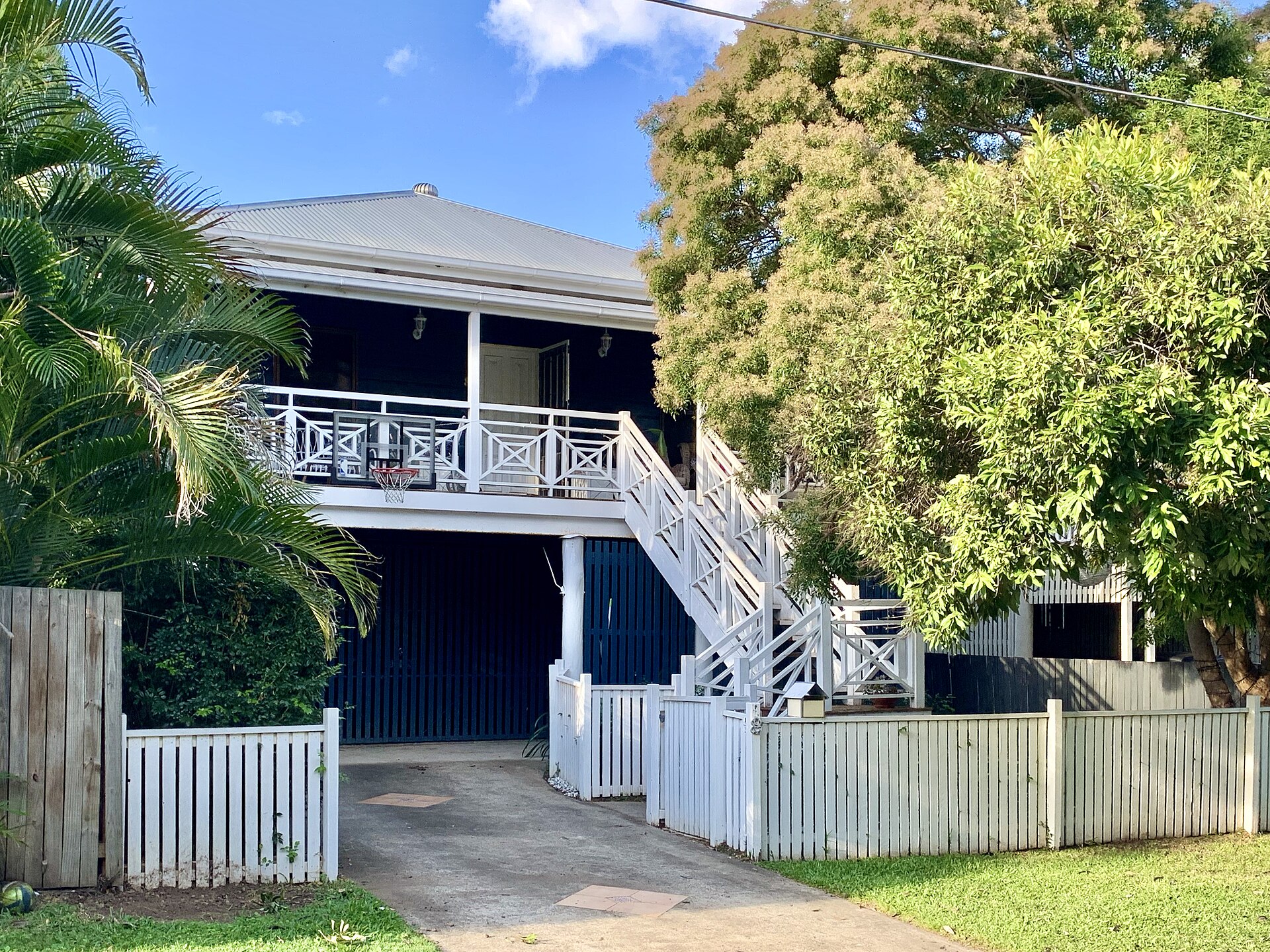
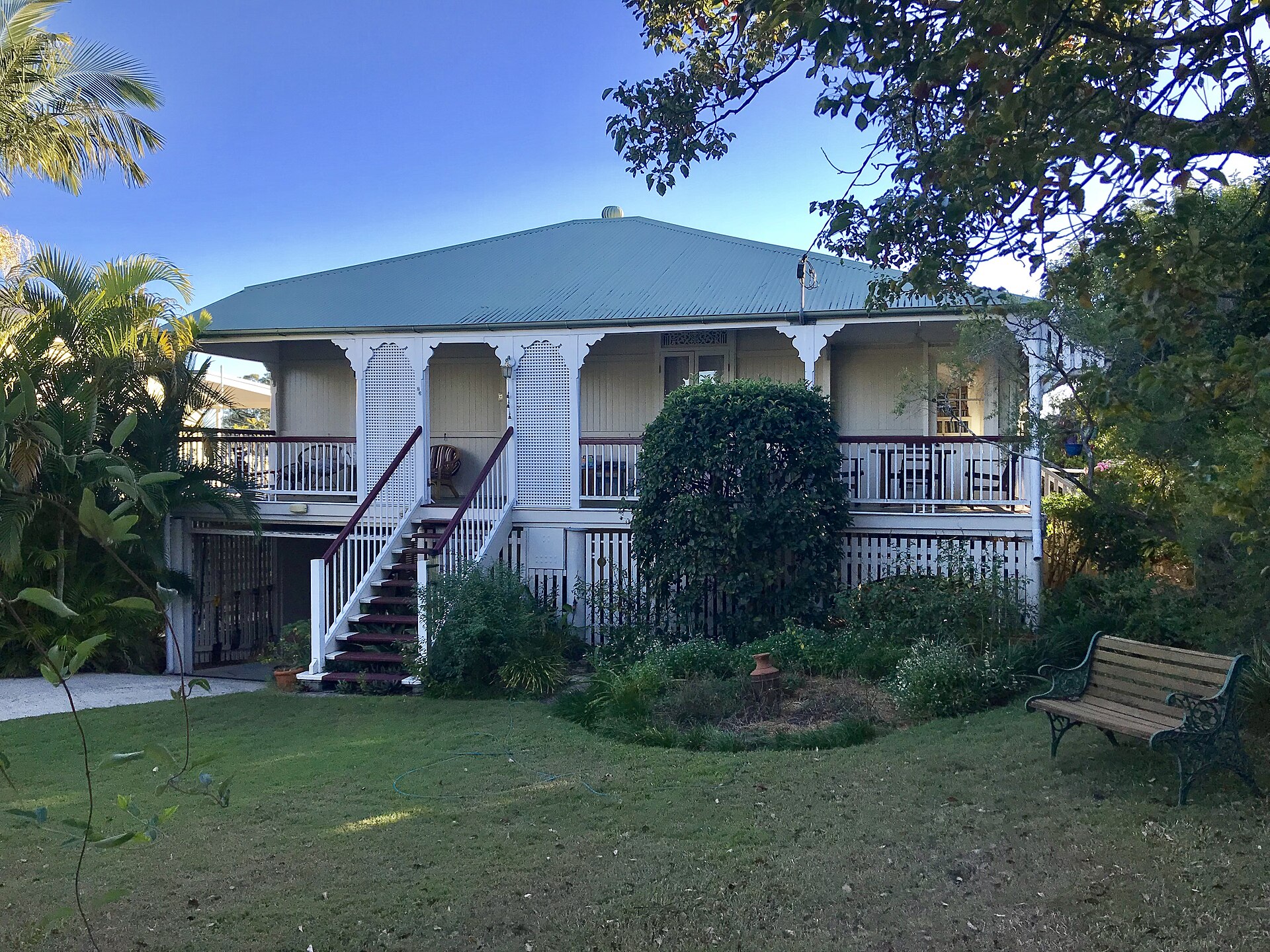
You can still have colour and a room that feels like a Brisbane room rather than a hotel. The constraint is physics. A house that already knows how to catch a breeze — a Queenslander, a well-eaved new pavilion — will forgive a lot if you do not then seal a wet box in the middle of it and call the silicone a strategy.
If you are still drawing, put the fan, the cowl, the waste and the eave on the first plan, and let the stone sample come last. That order is the difference between a kitchen that photographs well in May and a bathroom you still like in the tenth February.
Frequently asked questions
Is natural stone a better kitchen benchtop than laminate in a Brisbane house?
Not automatically. A well-edged, high-pressure laminate with a waterproof substrate will outlast a porous stone that is left under lemon, wine and a wet pot. Stone wants sealing, drip edges and a household that will not treat it as a cutting board. Choose the system, not the prestige.
Does a bathroom exhaust fan that vents into the roof space meet the job in this climate?
No. You are moving steam into a dark, still volume where it condenses on a cool night and returns as a stain. Duct the fan to outside air, give it a run-on timer, and size it for the room you actually built, not for the cheapest unit on the invoice.
Why do door handles and tapware corrode so fast near Moreton Bay?
Humidity plus salt is a chemistry experiment. Uncoated mild steel, cheap zinc fittings and raw feature metals near a bathroom or a northerly opening will spot and seize. Specify marine-grade or well-finished hardware and keep wet rooms exhausted. The finish is a maintenance plan.